Ask most people who train whether they eat enough protein and they'll say yes. Then ask what they had for breakfast. Usually it's a coffee, maybe a granola bar. Lunch was a sandwich. Dinner was a big plate of chicken that did almost all the work. The daily total might even look fine on paper. The problem is how it got there.
120 Grams Isn't Always 120 Grams
Picture two people who both eat 120g of protein a day. One gets it as 10g at breakfast, 25g at lunch and 85g at dinner. The other gets 40g, 40g and 40g. Same number in the app at night. Very different day.
If you're still working out what your daily number should be, we covered that in how much protein you actually need a day. This post is about what comes after you know the number: how you split it up.
Why a Per-Meal Target Works
The common recommendation among coaches and dietitians is to get a meaningful dose of protein at every meal instead of loading it all into one. For most active adults that lands somewhere around 30 to 40 grams per sitting. Treat it as a rule of thumb, not a law.
Your muscles respond to each meal. Your body doesn't bank protein for later the way it stores carbs or fat. Every meal with a real amount of protein in it gives your muscles a reason to repair and rebuild. Three solid meals means three of those chances a day instead of one, whether you're building muscle or trying to hang on to it while you lose fat.
Protein is what keeps you full. It's the most filling of the three macros. A 10g breakfast is gone by ten o'clock. A 40g breakfast carries you to lunch. And that 3pm snack run? Nine times out of ten it's a lunch that didn't have enough protein in it. Front-load the protein and most of that afternoon grazing stops on its own.
Why 40 and not 30? For a lot of people who train or are trying to lose fat, three meals of 40 gets them to their daily target with room for a snack. If you're smaller or less active, 30 might be plenty. Run your numbers through our macro calculator, then divide your daily protein by the number of meals you actually eat.
What 40g Actually Looks Like
Here are real numbers straight off our own menus.
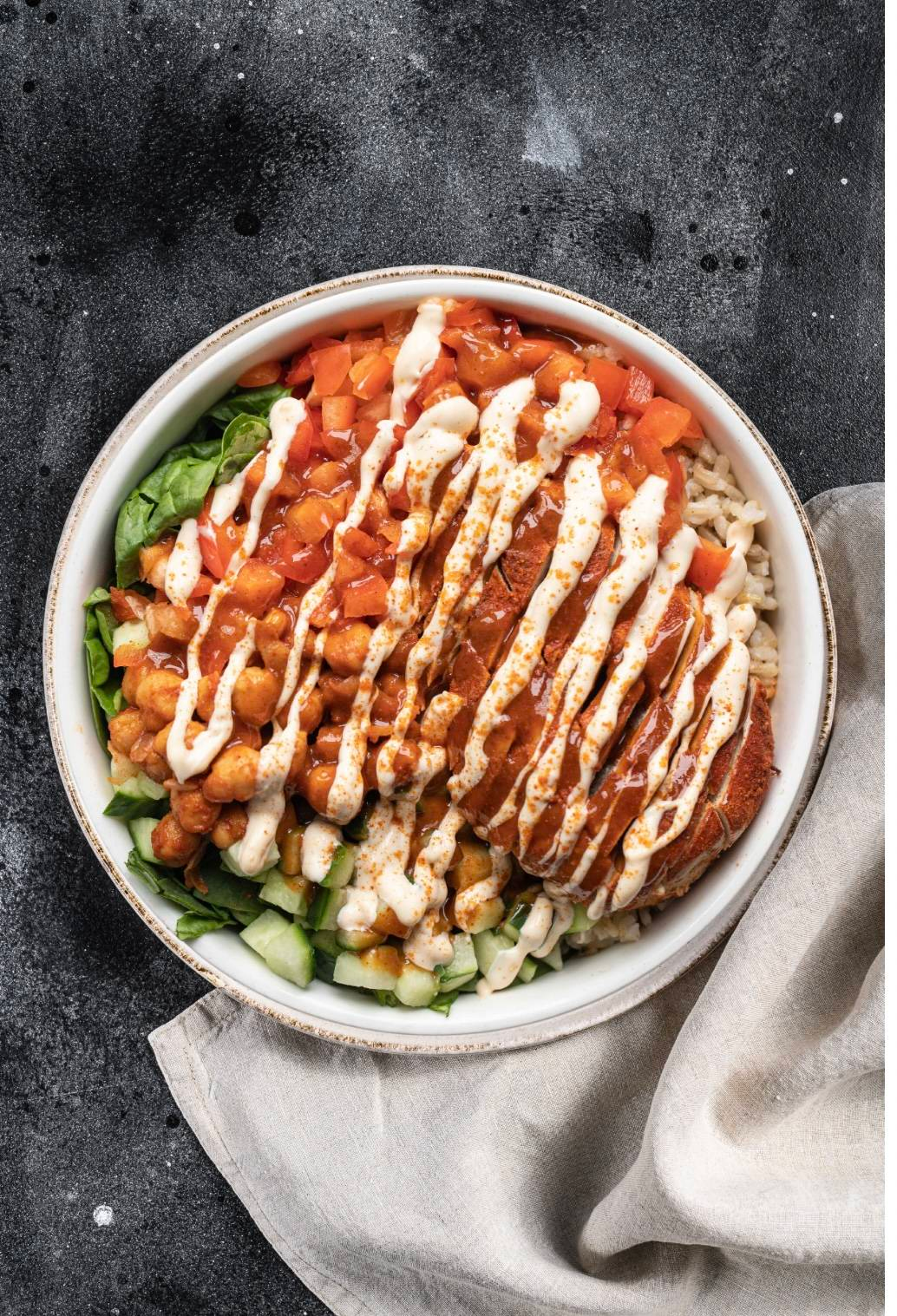
Protein first, then build the rest of the bowl around it.
On our meal prep menu, a Greek bowl with the standard 4oz of chicken and half a cup of brown rice is 36g. Close, but not quite. Bump the chicken to 5oz for an extra dollar and it's 44g. The Incredibowl clears the bar as it comes, at 46g with the same chicken and rice, and the Tandoori Chicken is 43g.
In store, a Regular Greek God with the standard 4oz of chicken and no rice is 42g. A Regular Mesquite is 38g on greens and 43g with a full cup of brown rice, so that one needs a small nudge.
Plant-based bowls are where you really have to pay attention. Our Glory bowl on meal prep, with one Beyond Meat patty, is 26g. Solid meal, but well short of 40. It needs the add-on: going to two patties takes it to 44g.
Breakfast is usually the biggest gap. Two eggs and a slice of toast is somewhere around 15g. Our Broccoli Cheddar Egg Bites, which most people would call a high protein breakfast, are 19g for three. Compare that to the Mixed Berry Overnight Oats at 35g, the Mixed Berry Yogurt Parfait at 52g or the Chia Proats at 63g.
Audit Your Own Day, Then Fix the Low Meals
You don't need to track forever. Pick three normal days and write down a rough protein number for each meal. Labels, an app or our menus will get you close enough. Then look at the pattern, not the total. Most people find breakfast under 20, lunch somewhere in the 20s, or one meal that's basically all carbs. Circle anything under 30.
Fix one meal at a time, starting with the lowest. For breakfast, that usually means swapping the granola bar for something actually built around protein. For lunch, the fix is usually the portion, not the meal: if your bowl is sitting at 36g, one more ounce of chicken is a tiny change for an 8g jump. And if you've been eating 85g at dinner because it was your only real meal, that one can come down.
That's what high protein meal prep is really for. When lunch is already in the fridge with a known protein number, you aren't standing in a food court at 12:30 guessing. We lay out how our meals are built on our high protein meal prep in Surrey page, and what to order for muscle building vs. weight loss covers the menu side.
Want 40g at lunch without thinking about it? Pick your meals, bump the protein where you need it, and they're ready when you are.
The Short Version
Find your daily number. Divide it by the meals you actually eat. For most active people that lands around 40g. Then make every meal carry its share, starting with breakfast. That's the whole idea behind high protein meal prep done properly: not one huge meal, but every meal pulling its weight.
Doing this every week? Our meal prep packages bring the per-meal price down. And if you want your order set up around a specific protein target, email our in-house nutritionist at [email protected] and we'll help you build it.